



Do you have a plan - or a pile of money?
Most people arrive here with the second one and assume it's the first. Saving well is a real accomplishment. It is also a different problem from the one you're about to solve.
QUESTION ONE
Will it actually last?
You know what you have. What you don't know is what it produces — every year, adjusted for inflation, for as long as you're here. Retirement math runs in the opposite direction from saving math, and almost nobody makes that switch on their own.
QUESTION TWO
What will you owe?
Without a deliberate strategy, required minimum distributions and bracket creep can quietly cost a retiree six figures over a long retirement. The window to do anything about it opens the day you stop working and closes at 75. Most advisers never raise it. We lead with it.
QUESTION THREE
What if the market drops early?
A portfolio built for accumulation can be permanently damaged by a downturn in the first five years of retirement — not because the market fell, but because you had to sell into it. This is the risk most plans ignore. It's the one we design around first.
If one of those is sitting in the back of your mind, you're exactly who we built Plan Wise for.
THE WISE HOME™ FRAMEWORK
We don't hope your retirement works out. We build it.
Every plan we write is organized around the Wise Home™ — a three-tier framework we developed at Plan Wise that gives every dollar you own one clear job. You'll know what each account is for, why it's there, and what would have to happen for us to change it.

The Foundation - the guaranteed part of your retirement
This is the income you can count on every month no matter what the market does — Social Security, pensions, and other reliable sources, coordinated to cover the life you actually want to live: the bills, the travel, the grandkids. When your Foundation is built right, running out of money is off the table.
The Walls - the Wise Reserve
The defining element of the Wise Home™: a buffer that stands between market volatility and your lifestyle, so your growth assets are never sold at the wrong time. How big should yours be? That's a calculation we run from your real numbers — not a rule of thumb.
The Roof - long-term growth & legacy
Protected by the layers below it, the Roof compounds aggressively in tax-advantaged accounts — and is never sold during a downturn. Over a 20–30 year retirement, this is where your legacy is built.
THE WISE HOME™
One coordinated plan.
Retirement isn't an investing problem with some tax questions attached. It's a coordination problem — and the pieces only work when someone is holding all of them at once.
01
Retirement Income
Where your paycheck comes from once the paycheck stops — which account funds which year, in what order, and what changes if you retire earlier than planned.
02
Tax planning & Roth conversions
We map your brackets across the whole retirement, then use the low years deliberately. The goal is the smallest lifetime tax bill, not the smallest one this April.
03
Social Security timing
Claiming age, spousal benefits, and survivor income modeled together with your other income — not as a standalone breakeven chart that ignores everything else.
04
Investment management
Portfolios built to the job each tier has to do, at a risk level matched to your tolerance and your timeline. As a fiduciary, we're required to put your interests first.
05
RMD's & Medicare IRMAA
Required distributions and Medicare surcharges are driven by decisions you make years earlier. We plan them forward instead of reacting when the notice arrives.
06
Legacy planning
Beneficiary designations, account titling, and making sure the right assets pass to the right people in the right way. We review what you have, flag what needs attention, and make sure the financial plan and your estate intentions are pointing the same direction. If you need documents drafted, we'll tell you what to ask an attorney for.
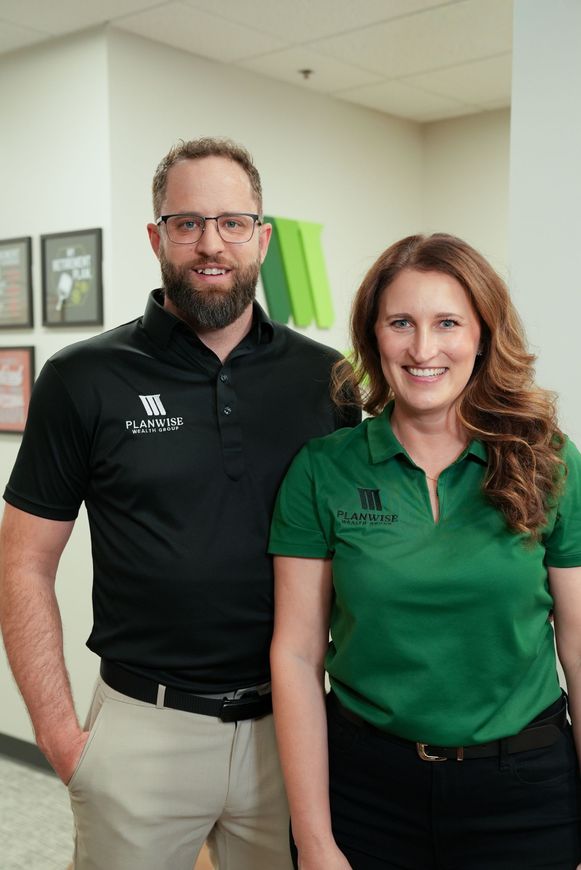
THE PEOPLE BEHIND YOUR PLAN
You'll know us by name.
At Plan Wise, the advisor who builds your plan is the advisor who presents it, answers your questions, and is accountable for what it says. That is a standard, not a circumstance. It is the reason we structure the practice the way we do — so that the person who understood your situation in the first meeting is the same person reviewing it in year seven.
Hannah runs everything that makes the relationship feel like a relationship — the events, the follow-through, the reason this office does not operate like a call center with a nice lobby.
Before Richy ever looked at a balance sheet, he spent seven years in the Air Force on B-52 avionics and mission operations — work where nobody improvises and nobody skips a step. That habit is what he brought to planning.
ADVISOR INFORMATION:
Richy Hirtle: founder, Series 65 fiduciary, Chief Compliance Officer, author of The JETBook Retirement, and founding board member of The Retirement Institute - a 501(c)(3) educational organization that teaches the retirement decisions most people never get explained to them — taxes, Social Security, Medicare, legacy — through free community classes and a weekly radio show. No products. No pitch. No cost. He helped start it because the questions that cost people the most are usually the ones nobody sat them down and explained.
HOW WE WORK TOGETHER
5 stages. No proposal in the first meeting.
We don't put a recommendation in front of you before we understand your life. Here's exactly what the relationship looks like, start to ongoing.
01
Discovery
You'll leave with: a clear sense of the gaps, and no obligation.
A conversation, not a pitch. What prompted the call, what you're hoping retirement looks like, what you own, and what's worrying you. We also figure out together whether we're the right fit — sometimes the honest answer is no.
02
Strategy
You'll see your plan on paper, and the reasoning behind every number.
We build your Wise Home™. Income floor, Wise Reserve target, growth allocation, the Roth conversion window, Social Security timing, and what your tax picture looks like at 65, 70 and 75. Then we walk you through it and you tell us what's wrong
03
Implementation
Every account is doing its job
Accounts opened, transfers initiated, allocations set, beneficiaries corrected, estate work coordinated. You'll get an account-by-account map showing exactly what happens to each one and why. We track every item until it's finished.
04
JETBook Celebration
You leave with: your JETBook, and a full understanding of your plan.
We hand you the finished JETBook and walk both spouses through it. This one matters to us — it's the meeting where decades of saving turns into something you can hold, read, and explain to your kids.
05
Ongoing Reviews
You leave with: a plan that's still true a decade from now.
The plan is a living document. Every year we compare what we projected against what actually happened, execute that year's conversion, check your Reserve against target, review your IRMAA tier before open enrollment, and confirm your beneficiaries are still right. Life events don't wait for the annual review — call us when one happens.
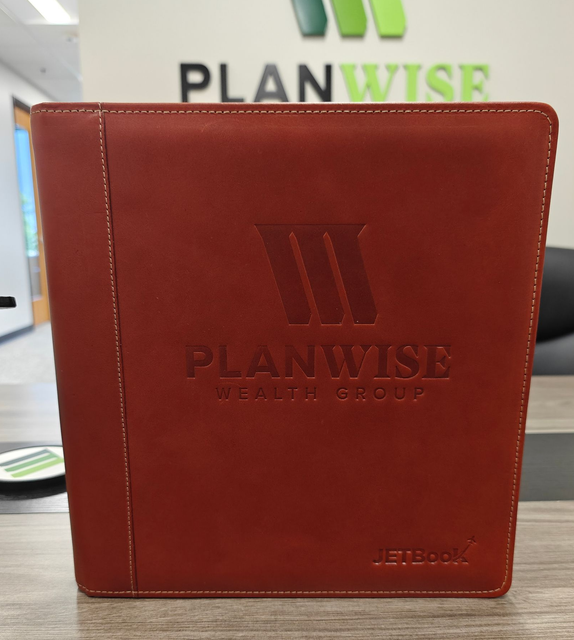
YOUR JETBook BINDER
Your retirement, in a binder you'll actually open.
A financial plan that lives in a PDF gets opened once. The JETBook is a physical binder that holds your whole strategy in plain language, organized so you can find the answer to a specific question in about thirty seconds.
It's the thing spouses tell us they finally understood the plan from. And it's the thing your family will be grateful exists if they ever need it without you.
NEW - THE PLAN WISE RETIREMENT PODCAST
Retirement questions, answered out loud.
Real conversations about the decisions that make or break a retirement — taxes, income, Social Security, and everything your 401(k) statement never told you
EPISODE 01
The First Retirement Plan I Ever Built
Read Episode 01 full transcript
Automatic transcript from YouTube captions. It may contain transcription errors.
[0:01] So, what do you do at Plan Wise Wealth Group?
[0:02] Uh, what do I do? I What do you not do at Playwise Wealth Group? I should say I don't do the money stuff. I I was never good at math.
[0:11] And mom, dad, I know you guys are watching this, so you'll you'll appreciate it. But, so they were like, can we retire? And they were 55 and 54 at the time. We were able to put together the plan that enabled them to
[0:19] do that. And that was where I got that first taste of like, wow, we could really make a difference helping people do this.
[0:25] I have our yearbook. 2006, the year we graduated. They don't want to. They don't want to see it.
[0:30] They do want to see it. I think everyone wants to see this.
[0:35] All right. Welcome to the Plan Wise Wealth Group podcast. I'm Richie and this is my beautiful wife Hannah. Hello. Welcome to the podcast.
[0:42] Yep. And on today's episode, we're really going to talk about um who we are. If you've come to a seminar before, maybe you've seen us online or uh radio
[0:50] or podcast or wherever and you're interested in learning a little bit more about us. On today's episode, we're just going to share who we are. how did we
[0:57] get to this point and a little bit about what we do, but mostly just getting to know us as the owners of Plan Wise Wealth Group. So, I think Hannah, we start we go way back.
[1:08] We do go way back. We're high school sweethearts. So, we met freshman year of high school, but we didn't date until the end of sophomore year.
[1:17] Yeah. But go back even further because I remember All right. Well, well, I guess we were eighth grade. Didn't know each other. Well, no. I saw you in eighth
[1:25] grade cuz we had a Yeah, we had a school thing. I went to a a competing school from where you went to. We saw each other. We did?
[1:31] Yeah, we did. About You probably don't remember. I don't remember. I don't remember.
[1:35] Yeah. Obviously, I married up, but um So, 8th grade we went I went to a new school, which you were already going to
[1:42] at the time, and my sister was two years older or a year older than me, and she was playing volleyball. Yes.
[1:48] So, it was there was a summer volleyball camp at the new school. Melanie went to go do it.
[1:52] Melanie went to it. And it was early in the morning, like stupid early. And I'm not a morning guy. Like, you know that about me. I do know that about you.
[1:58] My kids aren't probably either. One of them might be. Yeah, one of them might be.
[2:02] Yeah. Anyways, long story short, I went with Melanie to the volleyball camp cuz I wanted to see what girls were at the new school and that's where we met. That's where I saw you.
[2:09] All of the high school was there.
[2:11] Yep. That was I do remember that. I remember you sitting there with your mom. My mom was there? Yeah. She She drove you guys.
[2:18] Oh, yeah. Well, that makes sense. Yeah.
[2:23] So that's where we met and then like you said at end of sophomore year we started dating. Now it's interesting too because your dad was my coach for basketball and football.
[2:32] Yes. I'm surprised you even had the nerve to come up and talk to me cuz everybody all the guys in my class they'd see my dad walk by and oh I can't
[2:40] like I'm not even you don't exist and it's just like okay we were just talking about homework.
[2:45] Yeah he's he was intimidating. I mean, in sports anyways, like I remember the first time I came over to your house, I thought he was going to be screaming or
[2:52] like kicking stuff, you know, totes at me or whatever because that's what he did during basketball. But got over there, he's like the gentlest guy ever.
[3:00] Yeah, that was hilarious. But anyway, so started dating uh after sophomore year and what we want to go to 2008.
[3:10] Oh, wait, no, I have this. Hold on.
[3:12] Sorry. I should have had this on the table. I have our yearbook. Okay. From 2006, the year we graduated.
[3:20] They don't want to They don't want to see that.
[3:21] They do want to see it. I think everyone wants to see this.
[3:24] We can move on. So, no, no, no. So, every senior has to write about like what they want to do when they're adults cuz at 18, you know
[3:32] what you're going to do for the rest of your life. But it was really funny because our oldest son was looking through our yearbook and he was like,
[3:40]"Mom, dad, look what dad wrote down for his like dream of what he wants to become." And I I was like, "Oh, yeah. It was probably a police officer." That's what I thought.
[3:49] That's what he was going to school for at first.
[3:51] That's what my dad did. I thought, "Don't follow his footsteps." Yes. And we're going to have to blur some of this stuff out, guys, cuz I don't have permission from anyone.
[4:00] These guys love doing that. Don't worry. This is Richie, senior year. Look at you. Wow. Do I have braces on or no?
[4:08] You do have braces on. You can barely see them, though. Yep.
[4:11] But um on here it says you're going to Metro State University and your major is in business with a financial emphasis.
[4:20] That's hilarious. Who would have thought?
[4:22] You know what's wild about that is I didn't think I would do this at all. Yeah.
[4:26] Like and I remember thinking everybody around me I felt like had it figured out. They knew what school they were going to. Yeah.
[4:33] What they were going to study. I had no stinking idea. Like no clue. And so I ended up So I didn't remember putting that on there until they showed us. I
[4:40] was like, "Wow, that's kind of incredible." It's funny. It's like full circle. Yeah. Everything.
[4:45] I did. I went to I went to criminal justice and I did that for I think like not even like one semester. Yeah, I think it was.
[4:52] And then switched up. But man, uh so we went to Metro State. That was in Colorado. I remember it took like an hour to get to there every day. So that didn't last very long. Not traveling on
[5:00] a bus or no, it was a train down downtown Denver. Um but 2008, we decided, hey, we've been together a while. We were 20 years old at the time.
[5:09] Let's let's get married. Let's figure out how to get married. So, we we enlisted in the Air Force.
[5:17] I did. Yeah.
[5:18] I know. I always say we and they're like, "Oh, was was your wife in, too?" I'm like, "No, I mean, she technically I was, but I wasn't." Yep. We went to uh So, another kind of
[5:28] funny story. I went I ended up going to training and this is wild. When you look back on stuff, you know how you like get all the answers and it's really clear.
[5:36] But during the time, I was talking to my recruiter. I said, 'I want to enlist. I didn't even know what enlisted or officer was. No clue, but I was like, I just want to be in the Air Force. So, I had to take this test. ASVAB.
[5:47] Yeah.
[5:48] Yeah. ASVAB test. Took that test, scored really high on it. And my recruiter, I remember, like lit up. Because, of course, Sam, he's like, "Oh, I could put this guy anywhere like this. I'm going
[5:56] to fill a position I need to fill." To me, I'm like, "Hey, I just want to go in and know what my job's going to be." But he kept telling me, "You can't do that.
[6:03] There's no you can't have a guaranteed job going in." He told me that a million times. hindsight, now I know that you can. But anyways, I went in open electronics because I didn't want to be
[6:11] a police officer. I already knew that's not what I want to do. So, open electronics. I end up doing nine months of training in Texas, Mississippi, back
[6:20] to Texas. I remember I flew home. We got I flew on Friday.
[6:24] Yeah. Friday like it was it was technically Saturday morning, like 1:00 a.m. You landed. Yeah. Super late.
[6:31] And our wedding was at 10 in the morning.
[6:33] We woke up early. We got married. um the next morning early again, flew back out.
[6:39] And the reason we did that so quickly is cuz we needed married orders cuz I need you know where we're going to be stationed. I needed her to be on it so we could get go together.
[6:47] So about a week after that, I remember I got this white envelope in the in the in my dorm room is waiting for me. Had my name on it. Yeah.
[6:54] And I'm excited. You know, I have Spiker next to me who I had just done nine months of training with. He opened his up and he's going to Italy. And uh we I
[7:03] think we were on the phone when he told her. Yeah.
[7:05] Yeah. Yeah. So, I'm I'm Spiker's going to Italy. I think Hannah, I think we're going to go to Italy. Look, Italy has always been my dream.
[7:11] Like, I was like, we're we're getting Italy or we're getting Hawaii.
[7:14] Like, that that was in my mind. I'm like, this is going to be the most amazing like career in the Air Force and we're going to travel the whole world.
[7:23] Until until Yeah. Hannah, we're going to Italy. We're going to, you know, Spain or I think Germany or Hawaii or something like that. And I open up the
[7:32] folder and it says congratulations whatever May not North Dakota. Woo.
[7:38] Oh my gosh. I honestly my I dropped cuz that's like if you So you have to do a list of 50 bases you want to go to like you like all 50 you have to fill out.
[7:47] Yeah.
[7:47] Number 50 for me was my not because everybody says you don't want to go there. It's the black hole. It's cold. It's miserable. Whatever. My not North Dakota.
[7:55] Yeah. But I remember uh distinctly you got excited on the phone which totally changed me because I think I could have gone there miserable but once I said it you were like yeah let's go.
[8:06] I did. I did say that and I don't know if I told you then but I think you know now but like my mom she so my dad was in
[8:14] the military and I grew up military brat and so my mom before the orders I remember telling her I was like mom I'm
[8:21] going to Italy. I can't wait for him to open up these orders. This is like two days before. And she was like, "Well, Hannah, just remember he has no control
[8:29] over his life right now. Like, no matter what it says, you need to be happy about it because if you make it miserable, the whole experience will be miserable." And it was it was so Yeah. Thanks, Mom.
[8:39] That was great advice. But yeah, so I I remember him opening it and saying, "My not in North Dakota." And I was like,
[8:46]"What does that mean?" But I did not say that. I was like, "Oh my gosh, I'm so excited. It's our first married orders. I can't wait. Like, it's going to be a great time.
[8:56] It was though, looking back on it, we were there what, 5 years? Yep.
[8:59] Negative72 was the coldest we ever experienced, which was pretty dang cold.
[9:04] Yes, you could throw that. I remember that day I was we were I was working on the flight line. So, I ended up working on B-52s doing communication, navigation,
[9:12] and bomb system avionics. So, I did that for three years and then once I made staff sergeant, I moved to the mock where it was like you kind of control the flight line for the commander, which
[9:20] I really enjoyed. Uh but anyways, negative72 when I was on the flight line and we all threw our coffee up and it just like totally disappeared. Pretty fun.
[9:29] Uh so anyways, we decided um let's get out. Let's not reinlist. So we did our time up there. We we transferred into
[9:37] the guard where we moved back to Colorado and really another kind of life point for us cuz we had one son already.
[9:45] Yeah.
[9:45] Our oldest obviously now. Um, but then we found out we're pregnant with our second or you were pregnant with our second. Yeah.
[9:53] And we're living with your parents and I'm working at King Supers, which is Kroger here in Indiana. Yeah.
[9:58] And I just remember like I'm stacking fruit and I'm thinking like like what the heck am I doing? And really when I self-reflected on it, I was just scared.
[10:06] You know, we did just finished the Air Force. I didn't really know what the career was going to look like and I was just like, I got to get a paycheck and I I was just scared kind of working there.
[10:14] um ended up putting my two weeks in and quitting and about a week later got a job at a financial firm uh in Colorado. So, Able Financial Group
[10:22] is really where I started in this career. Um I don't know how long ago now. That was 2014.
[10:29] Uh I think 2014. Yeah.
[10:32] U so anyways, love that job. Behind the scenes, I basically built retirement plans, you know, for financial adviserss. Yeah.
[10:39] So, they would send me all their information. and I would build the retirement plan, educate the adviser on it, and then they would present it, you know, to you guys. So, built thousands of plans that way. That was kind of fun.
[10:50] But we were living in Colorado. We were. Yeah. What do you think of Colorado, honestly?
[10:57] Oh, I mean, Colorado is beautiful. I I But it I don't know. It's uh It's not
[11:04] like Indiana. Indiana is a different kind of beauty because you have corn fields and stuff, but it's I love it here. Like people here are so nice.
[11:13] Yeah, that's a big difference for sure. Yeah.
[11:15] I remember I went into like Home Depot and you guys were like, "Hey, what are you working on? What are you building?
[11:19] What are you What are you doing?" In Colorado, they'd be like, "Get out of my way. You're in the aisle. I need to get there." Yeah. Yeah.
[11:23] Different different pace. So, uh, when did we move here? Six years ago. Yes. 2020. Oh, yeah. It was right during it. It was during it all.
[11:31] Yeah. Right during it. So, found a great house um out here kind of on the north side of Indianapolis and uh that's where we've been and we're just loving it.
[11:41] Really really enjoying it.
[11:42] Yeah, the house our house I love our house. Um and it's funny because I remember when our realer was taking us
[11:50] through we she like booked the whole day. She was amazing.
[11:54] Anyway, so we were looking at like 12 15 houses. Yeah. Liz looking for a realer. Liz was so good.
[11:59] She's so good. Um anyway, but she showed us so many beautiful homes and there was one on the list and I remember I was
[12:08] like I don't want to see this one. Like I was like this one's not it. And we were driving right by it. So she was
[12:15] like we'll just stop in and Richie was like yeah I want to see it. I was like fine but I don't think we're getting this one.
[12:21] We drive up to it and I was like oh my goodness this is the house. Like beautiful house. It just the pictures were so bad. Whoever the realer was
[12:28] before was like it was so bad.
[12:31] They tried but like I didn't want to say that pictures were bad, but they were so bad though. The house it made the Yeah, it made the house look
[12:38] different than what it is. And so um but yeah, it was we I remember walking in and I was like, "Oh my goodness, this
[12:45] is it. This is the house." So it was it was a lot of fun. Liz did really good work.
[12:51] Yeah, she really did. So, we moved here and then um getting my start in Plan Wise Wealth Group. I we started out um
[12:58] got my insurance license, did that for a little while. I own another company where we where we basically we train financial adviserss how to do this job.
[13:06] So, there's 3,500 financial advisor clients in that business and we train them on, you know, how to do all of it from seminars to content like this to,
[13:15] you know, taking you guys through a plan and what to do there. Um, so was doing that for a while and then it just came to the point where I want to meet with people again.
[13:24] Yeah.
[13:25] You know, just you and I are I like being with people, sitting at a circle table like this and and just meet with them. The first retirement plan I ever did was for my parents and mom, dad, I know you guys are
[13:34] watching this so you'll you'll appreciate it. But u that was really the first personal plan I ever did where they were like, "Hey, is it possible for us to do what
[13:43] we want to do?" You know, to to really Dad was a police officer. Can I stop working? mom was working I think at uh what was that
[13:51] place? Murder Ari. Oh no it wasn't I don't know she was doing something working really hard. She put me and my sisters through
[13:59] private school and um you know anyway so they were like can we retire and they were 55 and 54 at the time. Yeah.
[14:06] So I was like well okay what do you guys want to do? I mean what's the plan?
[14:09] Like we want to sell our house hit the road. They had a camper and you know their bike and boat and stuff. Um, so anyways, we're able to put together the plan that enabled them to do that. And
[14:17] that was where I got that first taste of like, wow, like we could really make a difference helping people do this.
[14:25] Um, living their dreams. Your parents would send pictures y of all their fun excursions that they were doing and
[14:32] Price is Right. Prices right ocean fishing Arizona. They went to, you know, Florida, just all kinds of stuff. It's really cool to see.
[14:41] Um, so that's where we got to start in this. And then then I got my series 65 license and then we opened up the RAIA which is a registered investment advisory firm which is what plan wise
[14:49] wealth group is. So what that really means is we're a fiduciary planning firm. So we work in the best interests of our clients and um anything you know
[14:58] tax planning is a big one. We're going to talk about that soon. Um income planning, social security planning, you
[15:04] know Roth and RMDs and uh you know legacy planning. It's all of those things kind of combined is what we're
[15:11] able to do for our clients now, which has really just been really fulfilling for me. So, what do you do at Playwise Wealth Group?
[15:19] Uh, what do I do? I What do you not do at Plaid? I don't do the money stuff.
[15:26] I I was never good at math. Um, but I like people. So, um, I just help run the
[15:33] office. I, you know, I schedule the seminars. I get paperwork ready, um, book the appointments. Um, anyone that
[15:42] calls in, I'm usually the one answering the phone. Um, yeah, I mean, we have people that help out at the seminars.
[15:49] Andrea, she's amazing. She is so that she can like remember anyone's name. I'm so jealous. Like, I can never remember
[15:58] people's names, but she just she is like you she hears it one time and she can just remember everything, right? So, uh, but she's amazing. She's
[16:07] one of our first points of contact, um, with people because she's just so friendly. And then Paul will help out, too. He does a lot of the marketing. But yeah, that's um, that's what I do here.
[16:18] So, she's being Hannah's being like super like what's the word? Like humble with what you actually do here. She's the chief operating operating officer,
[16:26] which basically means she does everything. I mean, I do the financial planning as the adviser. Hannah does basically everything else. So, if we're talking about being realistic, I'm not trying to just get points here.
[16:37] You got them.
[16:40] Um, it's I mean, really and sincerely, it's it's everything. We do what, 20 to 40 events a year around
[16:47] Indianapolis, you plan all of those. Um, all the appointments that come in and people I meet with, you plan all of those. Um, the drinks and everything,
[16:56] you know, and the supplies and everything in the in the office, you do all of that. Like, realistically, you do a ton. And um it it really makes a difference for our clients. You also did
[17:04] something really special with Mother's Day this year. Oh, that was a lot of fun. Yeah.
[17:09] Yeah. I did um I did the boxes with uh Simple Goodness Soaps. It's here in Indiana. They're I love her. She's so
[17:18] good at what she does. Um but anyway, so we got like a little package from them and we were able to mail it out with like a nice poem and uh yeah, so that
[17:26] was a lot of fun. And we have Father's Day coming up, so that's being planned.
[17:30] And you know, it's funny. Some of you guys ask me because I wear I don't have it on now, but I kind I wear like golf, you know, apparel or pillows and stuff cuz first of all, they're just comfortable.
[17:39] And it's that they don't get hot, all that stuff.
[17:42] So you'll ask me, "Are you a golfer?" Because I'm tall. I mean, I grew up playing basketball. I still play basketball. Kids play basketball. Absolutely love it. Um, so do I golf?
[17:52] No. Somewhat.
[17:56] I think he should golf. I think it's something you should get into.
[18:00] I know. He's like, "It'd be so hard if you golfed." Yeah. But I Here's the thing. I don't want to be bad at I can't be bad at it. And it's to golf. You have to really like practice. And I just
[18:08] haven't I don't I just haven't put the time into it. Just finding the time.
[18:11] Yeah. But um I want to start because I do think I would enjoy it. We're going to do Top Golf for Father's Day, which is going to be exciting.
[18:17] Yeah. I'm excited for that. I mean, I won't be there, but I'm excited for the guys to go. I think it's going to be pretty cool. Celebrate. Yeah.
[18:24] Um, okay. So, what else? So, that's what you do. What I do is, um, chief investment officer. He does everything.
[18:32] Oh, well, you can't say that back. It doesn't doesn't count. Um, just anything on the advising side is what I do. So,
[18:39] uh, we have a team all behind us. We'll we'll introduce them at some point. Um, it's not just us. We get the whole thing behind plan group, but we're kind of
[18:47] just the the leaders of it. Um, so anything on the advising side and the plans and the architecture behind how we put that together is what I do. Um, most
[18:54] of the time when we're meeting with you guys or we're meeting new people, we do it through referrals, uh, or through seminars typically. Yeah.
[19:03] So, uh, my book's coming out probably by the time you listen to this even. It might already be out. So, that's exciting. Uh, we're starting a radio
[19:10] show which might also be out by the time you listen to this. And obviously, we got the podcast as well. But um, seminars really are a great place to
[19:19] get started if you're interested in Plan Wealth Group. Yeah, it's a lot of fun meeting everybody. Yeah.
[19:25] That comes in and and people will ask questions during the seminar and I think you're so good with how you answer them
[19:33] and stuff. Um but then also we have cards. Oh yeah, that's new this year. Yeah.
[19:41] So we we try to, you know, we just try to do stuff that that is actually valuable to you guys whether you work with us or not. That's really the goal.
[19:49] So um so that was a good idea. And I think it I don't remember how we came up with it, but it's been awesome. Yes. Tell them what that is.
[19:56] Um, so the cards when uh people first come to the seminar, they fill out a form and then they also can write a
[20:04] question on a 3x5 card that we'll hand them. And it can be anything. I always tell them if it's something that keeps you up at night, something about
[20:11] retirement or a concern, um, just write it down and you will get to it during the seminar hopefully. And I think you've answered most of them. I think
[20:20] there was one or two that we just couldn't get to or it was too personal to answer because we don't want to, right? And we tell them just fill it out
[20:28] anonymously and be honest and and I think that's the coolest part. So what they do is you guys have them write it.
[20:33] We'll get, you know, 10 or 12 of them back every seminar.
[20:36] You guys hand them to me before I go to speak and then I read through them and then I make sure I work the questions into the talk, which as a speaker is
[20:43] kind of fun to be a little bit dynamic and kind of weave with what the audience actually wants to hear. But um what my favorite part about it is that it's u
[20:53] anonymous and real and real and it's one of my favorite things is after reading through them a
[21:00] lot of them and I don't want to say all of them are the same but it seems like everyone has almost the same concerns going into retirement
[21:09] and uh so that was actually pretty cool to see is like it might be phrased differently but yeah you're not alone with the questions
[21:16] which you could feel isolated When I meet with you guys in the office, it can feel isolating. It's like, does anybody else have this concern? Do I have enough? You know, do I have enough to
[21:24] last? Like, am I covered here or there or the kids or legacy or like all these questions come up. They come up for everybody. So, it is interesting to see.
[21:32] You can almost take them. And at this point, we pretty much know what's going to be asked because we've done enough times. Um, but you're not alone. Other
[21:40] people have the same questions. But this has been a lot of fun. Clear my throat. Sorry.
[21:44] So, that's okay. Um, everybody heard you clear your throat now.
[21:48] Ethan, Ethan's so good. He can cut that out. Pause.
[21:53] Okay, I was gonna actually play it out making fun of you.
[21:58] Um, all right. So, with these cards, what we want to do, we thought would be fun for for this series, for for the podcast here, is to answer them. So,
[22:07] we're not gonna say if there is a name on it, we're not gonna say the name, but we'll um Hannah will read the questions and then we'll talk through them and answer them because I think
[22:15] they're relevant. Like we just said, they apply to pretty much everybody. So, yeah, that's going to be fun. So, let's do this.
[22:22] Well, actually, I think you you probably know better what we're about to do, but you're going to read them, right? And we're going to answer them on the next episode.
[22:27] Yep. On the next episode. So, this will be the topic for the next one.
[22:30] Okay. If you have any questions about Hannah or I or what we do or plan wise, put it in the comments. send us a message. Contact information is
[22:38] somewhere. We'd love to get in contact with you. We'd love to help you out. Uh but okay, let's get that question and then in the next episode we'll be answering it.
[22:46] Okay, I'm going to read two questions.
[22:48] Two. Okay, but it's not limited to just those two in the next episode. So, just so you know. Okay, so the first one is, do I
[22:56] slowly put IRA money into a Roth or make the plunge and transfer all in one year?
[23:04] Okay. All right. That's the first one.
[23:06] And then the second one is, how do Roth conversions lessen the effect of the widow's penalty.
[23:14] Okay. So, a Roth sort of tax theme for the next episode.
[23:18] Yes. Roth tax theme, which 95% of people are going to deal with. Yes.
[23:24] And that comes up in every seminar. And in fact, a lot of our seminar focuses on it specifically. But so, okay. So, next episode would be really, really good.
[23:31] taxes, Roth conversions, and then what to do with the surviving spouse. Yep.
[23:37] All right. Now, this is the Plan Wise podcast. Yes.
[23:40] So, Hannah, yes.
[23:41] Give us some wisdom. What do you got for today?
[23:43] Make make mistakes because it's good for you. But our mistake that's happening in this moment that we could still get out of and we're not because I really want
[23:52] it is we're getting up another puppy mistake.
[23:58] I got I got strong armed into it. It's the cutest thing though. We're getting a little golden retriever and it's a girl, so I will not be as much outnumbered.
[24:07] I'm still going to be outnumbered, but yeah, our house is full of all boys. All of our pets are boys.
[24:12] We have a bunny. We have a cat. We have a dog. Currently, they're all boys. And we have three boys. I don't know if we talked about our kids. We'll do that.
[24:18] We'll do that some other time. We have three boys.
[24:20] We have We have We love you guys. You do matter.
[24:23] We have three boys. Uh three animals that are dogs or that are boys. And then now we're getting this one. I'll tell you what though,
[24:31] you guys strong armed me into it. It was a little dirty. No, I wouldn't say we did that.
[24:37] I love dogs and you know that when I was a kid, dad, I wanted a dog so bad. And I
[24:45] remember two times he left for hunting or something like that. And both times these little dogs came in the neighborhood, puppies, lost, and I
[24:54] collected them up and I loved them. And then dad got home after a week and he's like, "Nope, they got to go." like, "Yeah, broke my heart." So, I love dogs. We've
[25:01] had dogs our whole life, our whole married life.
[25:04] Anyways, Hannah and my youngest son attacked me.
[25:07] Look, I don't think it was just me, but they did. They did. I did. They did. But they would change his Netflix account. That was a lot.
[25:15] Say, "Can we get a golden retriever?" Like as you know how your profile will be like dad or you know whatever Hannah
[25:23] Netflix profile they would change it from dad to dad I'll pay for the dog or like dad can we please get a golden retriever or
[25:30] Yeah. I mean once you saw that you kind of knew like you're like well I guess we're getting one mistake but I don't think it's a mistake but no she's going to be cute. She's old today.
[25:39] Yeah. And she's a cutie. Yeah she is. So, all right. Good wisdom.
[25:44] So, your wisdom is go ahead and make mistakes when it comes to dogs.
[25:48] When it comes to dogs, when it comes to finances, come to us. Perfect. Yep.
[25:53] Very good. Well, that's a wrap. That's a great episode. In the next one, we're talking about taxes, Roth conversions, and whatever else Hannah throws at us.
[26:01] That's it. We'll see. We'll see you guys then. That's a wrap. High five. Did it. Crushed it.
EPISODE 02
Your Tax-Deferred Account Has A Problem
Read Episode 02 full transcript
Automatic transcript from YouTube captions. It may contain transcription errors.
[0:00] And that's really where we save our clients the most money is taxes. It's not uncommon to save, you know, six figures in taxes just doing this what
[0:08] everything we've been talking about the right way. People get a little worried about, can I still, you know, can I still buy that lure or go eat out at that cafe or get my nails done or
[0:16] I think everyone that's come into the office has said that even if they have had an amazing plan, they're all like, I don't think I can spend. And you're
[0:23] always like, I need you to spend. How do Roth conversions lessen the effect of the widow's penalty?
[0:31] Good question.
[0:35] All right, welcome back. This is the Plan Wise Wealth Group podcast. I'm Richie and this is Hannah. Hello, welcome back.
[0:40] And in this episode today, we're going to be talking about Roth conversions and taxes and what that means for your retirement. So Hannah's got a couple of
[0:48] questions. We read them in the last episode, so if you watch that, you already know what they are. But for those of you that are just catching up, Hannah, what are our questions we're going over today?
[0:56] Our questions? Well, before I get into that, I was gonna I wanted to clarify where we got these from. Okay.
[1:02] So, we have seminars. We run about 20 20 30 40 a year maybe. And they're just educational seminars.
[1:11] So people will come, they register, they come to the seminar and at the seminar I hand out 3x5 cards and they can put down
[1:19] any questions that they may have about retirement or something they're concerned about. And I think we
[1:26] mentioned it in the last podcast was most of them are very much like similar.
[1:31] There's a lot of similarities to all of them. So you're not alone. Everyone is almost in like the same boat with these
[1:38] questions. Um, but our questions that we're gonna be talking about today are Roth and I have a list of questions that you actually don't know about yet.
[1:49] So, we're going to have some fun then.
[1:51] We are going to have some fun. Yeah. So, first of all, I do want to clarify because I am not an adviser. I don't know a lot of this stuff even though I
[2:00] work in the business. But what is a Roth conversion? And can you make it easy?
[2:05] Like if I'm a fifth grader, how would you explain for fifth grader. I like it. Yeah. Okay. Before I do that, very important.
[2:12] Um, this is not advice. Uh, we are a registered investment advisory firm, which means we have a fiduciary duty.
[2:18] So, this will be for educational purposes only. Explain some stuff. It may or may not be a good fit for you.
[2:24] You need to talk to a professional before you would know that. Got that out of the way. All right. So, Roth, like it's a fifth grader. Is that what you ask?
[2:32] Yeah. Just something super easy like because Okay. Yeah. I mean, it's a great question because I would say 5 years ago, nobody would have known what the
[2:39] heck a Roth is. Um, now when I ask in the seminars, most hands go up. I kind of I kind of understand a Wroth and really what we're talking about there is
[2:46] a tax consideration. It's a it's a bucket of with money inside of it. And once the money's inside of it, it's taxree forever. I mean, that's really
[2:54] what a Roth is if you look at it high level.
[2:56] Okay. All right. Sounds good. Well, now that we know what Roth is. Okay. Yep.
[3:01] That's great. Great answer. Um, I'll go to our first question. Do I slowly put IRA money into a Roth?
[3:12] First of all, what is an IRA? Okay, it's just a retirement account.
[3:18] So, think of it like um a 401k, but it is an individual retirement account outside of that. Has more flexibility
[3:25] and options than a 401k or something traditional would have.
[3:28] Okay. So, do I slowly put IRA money into a WTH or make the plunge and transfer all in one year?
[3:38] Oh, okay. Um, so they're asking about Roth conversions there, right? So, I think so. Yes.
[3:45] So, let's talk about that. So, you guys know what a Roth account is now. It's a taxree bucket, but what does it mean to convert? Um, I did bring some uh some uh
[3:54] what do you want to call it? What would I call that?
[3:56] Oh, a visual aid. a visual aid. Thank you. I couldn't think of it. All right. I did bring a visual aid. We love visual aids.
[4:03] We love them. Let's keep, you know, let's make it simple and easy to understand. That's really the key. So, I brought these my friends over here.
[4:10] First one, Uncle Sam.
[4:14] Everybody knows Uncle Sam, right? Good old Uncle Sam.
[4:17] This is a really good representation of maybe a typical situation. I wouldn't say everybody falls into this, but a lot of times we meet with people in the
[4:25] office for the first time. This is kind of what their portfolio looks like, their retirement plan looks like. So this big bucket represents
[4:33] maybe an IRA or a 401k or basically something you've been saving in tax deferred. So the government kind of told
[4:41] us, hey, put taxfree money or or pre-tax money into these accounts. Let them grow grow and then when you're retired at some point you'll be able to take money out of these things.
[4:50] And do you get taxed on those?
[4:52] You don't get taxed when you put money in. you would get taxed when you take when it comes out later in retirement. Okay?
[4:57] And that's sort of the quote unquote lie for a lot of people because, you know, unfortunately or fortunately, sometimes the government can be kind of smart.
[5:05] So, they know that the the money that they're going to receive from the fruit is worth a lot more than the seed.
[5:11] So, they kind of tell us everybody, you know, throw it, you know, grow it, grow it, grow it, get all this fruit. It's going to be awesome. But then at some point, they do come knocking for that money because they want that retirement
[5:20] money. So, a lot of people that we meet with come into my office. They have this big old bucket. This is your qualified money or your tax deferred money. And
[5:28] after we meet with them, if I'm lucky, we'll kind of dive into their portfolio.
[5:32] If I could reach in here, every now and then, typically, we'll have another little bucket, this this uh red solo
[5:40] cup. And what that represents is a more tax favorable account, maybe like a brokerage account. So, it's something you've already paid the line share of
[5:48] taxes on it. maybe you have to owe some some growth taxes. Um, and it it's a good account to have, but we've got this huge qualified, then we've got this
[5:56] smaller one, and then if we're really lucky, we might have a little Roth account, a little baby Roth account. We'll put that
[6:04] right there. Um, and this is a a typical scenario. So, if this if this is you, don't feel bad or guilty. Um, you know,
[6:12] again, we've just been told safe. And as we're working, put money, put money away, put money away, put money away, and and you're going to use your company's account and you're just going
[6:20] to do that. Well, if you do that though, sometimes we end up with this situation.
[6:24] So, big qualified account, maybe a little bit tax favorable, and then a tiny little baby Roth account. Now, I'll put these to the side. Now, the question
[6:33] you asked is more, is this situation okay or what should we do about that?
[6:38] And ideally in retirement, we want a situation that looks like this. Trying to do it without making a bunch of noise in the mics.
[6:49] We want a situation that looks more like that. So we're evened out. Maybe it's not exactly 33 33 33 um but pretty
[6:56] close. That way we're not dealing with these major major tax issues later in life, which is in the years you don't want to deal with that, right? you're
[7:04] you're in retirement, you're age 75 or whenever your RMDs kick in, 73 or 75, you don't want to be dealing with these
[7:11] giant tax bills, which essentially is what's going to happen on this big bucket. So before this point, before RMDs, we need to even these puppies out
[7:20] so that you don't have a huge tax burden. So what was the question again?
[7:24] That was that's kind of in theory what it is, but what was it?
[7:26] Yeah, they asked, "Do you slowly put IRA money into a Roth or make the plunge and transfer all in one year?"
[7:34] Okay, so again, not advice. It's situational. Um, but I would say most of the time, we're not going to want to do
[7:42] it all at once. And the reason for that is, think about it this way. Let's say you have a million dollars in a qualified account, an IRA or something
[7:50] similar. you wouldn't want to convert all million in one year or you're going to be taxed or ordinary income tax rates
[7:57] on on that conversion in that year on top of whatever other income you have.
[8:01] Maybe it's social security, maybe it's pension, maybe it's employment, whatever it is. Um, so can you do it by the law?
[8:10] Yes, you could convert all million at one time. Would you want to do it? Most likely not.
[8:16] Do you want to go a step further on that? Well, I had a quick question about that.
[8:19] So what are the risks of waiting too long to do a conversion to to do a conversion? Is there risks?
[8:28] Yeah. So that yes there well you know risks are subjective but the risk of waiting too long is now you hit RMDH.
[8:36] RMD stands for required minimum distributions. So that's where the government comes knocking on your door and they say hey you grew this money.
[8:43] That's awesome. Congratulations. but now we're going to make you take some of it out so that we can tax you on those dollars. That's what RMD age is. So, if
[8:52] you're not careful and you don't do conversions and you have a lot of money saved up because you've done a good job saving, you've worked hard, those RMDs
[8:59] can be can be quite hefty and it can really push you into higher tax brackets or even worse Irma brackets where you're paying more for your Medicare. We can it
[9:07] can have a compounding effect that we really don't want to do. So, the risk is you wait too long and now you're in a tax trouble. You're in you're in a tax
[9:16] problem. You're on the government's, you know, tax, not yours.
[9:20] Okay, make sense. It does make sense.
[9:23] Okay, one thing I want to just point out because I know I glossed over it is Irma.
[9:27] Yes, we talk about this at our seminars quite a bit. U but it's really it's related to this whole conversation because first of all, Medicare costs. It will it's going
[9:35] to cost you every year. Um I meet with a lot of people who don't understand that's that that's the case. Also, it's a government-run program. So, can can that change?
[9:45] Yeah, absolutely it can. So, last year it was $185 for your part B. Today or today, 2026, it's $22.90
[9:55] for your part B. So, it can definitely go up. Uh, but it could go up even further if you're a high income earner.
[10:01] So, Irma stands for um income related monthly adjustment amount. Income related monthly adjustment amount. And
[10:09] that just means you're receiving enough income that the government wants a little bit more of it. So they're going to make your Medicare more expensive so
[10:16] that you have to pay fees to them for the same for the same stuff that everybody else pays 202 for. You could potentially be paying three, four, five, $600 for.
[10:25] Okay.
[10:25] So that's where you could get in trouble if you don't have a smart tax plan going into retirement, especially when it comes to RMDs. And that's why you'd want to do the conversions prior.
[10:34] Okay. All right. So just to clarify your your answer to the question of do they
[10:42] take the plunge and transfer it all in one year? It's situational. Yeah. Not likely. Okay.
[10:48] Not likely all in one year. The really the sweet spot if we we'll take it a step further. The sweet spot is hey maybe you retired.
[10:56] Maybe there's a year or two before you take social security. That's a really good window because think about it your income's less. Yeah.
[11:02] You know at the end of your career you're probably making a good salary.
[11:05] Could you convert then? Yeah, but you're already at a higher income bracker tax bracket. So maybe you retire, income drops, you can do a conversion. The
[11:14] other sweet spot which we do with almost all of our clients and I would say typic typical situation it takes
[11:22] six to nine years to really level this thing out to get into those green buckets would be after retirement you you claim social security and then from
[11:31] claiming social security age to RMD age there's a really sweet window right there where you can do purposeful
[11:38] planned Roth conversions every year that way when RMDs come in we're not going to be hit with six figur years potentially or whatever it is in RMD payments.
[11:48] Okay.
[11:48] So, that's a really key window right there. After retirement age, before required minimum distribution age. Okay.
[11:56] All right. Good answer.
[11:57] Yeah, this is good. We're getting into it.
[11:59] I'm learning some new things today. This is great.
[12:01] Yeah, I might be an adviser one day. You should. You'd be good at it.
[12:06] All right. So the second question, okay, was, "How do Roth conversions lessen the
[12:11] effect of the widow's penalty?" Good question. This one's near and dear
[12:18] to me because as a husband, you're my wife.
[12:22] When I pass away, which let's be honest, I probably will pass away before you do.
[12:28] Um, what's going to happen to you? You know, that's on my mind. I don't want you to be in a situation where you're in a lot of trouble,
[12:35] right? So, um, that's what that refers to. So, the the widow's, um, penalty, that's what that refers to. I
[12:43] pass away, Hannah's left holding all of these buckets, and she still owes taxes on all of these buckets, on this giant
[12:51] thing. Doesn't change. Government doesn't care if I'm alive, if we're both alive. They just care. You've got this giant bucket. It's in your household. We
[12:58] want you to take tax out of it. But what happens when you go from joint to now single filer? A lot of people aren't
[13:05] necessarily aware. What happens is you get taxed a lot heavier, but your RMVS don't change. So, the situation is,
[13:13] let's say you have to take out $100,000 a year for your RMDs. I pass away. You still have to take out $100,000 a year
[13:21] for your RMDs, but now you're being taxed much heavier because you're a single filer instead of joint. There's not as much wiggle room there. So, we've
[13:29] seen it if in planning where if you do nothing, we talk about this at our seminar. If we have a couple and they don't do anything, the surviving spouse
[13:38] could, you know, if they do nothing overnight be paying $500, $600 more for the same Medicare and also much higher tax brackets into
[13:47] the, you know, 30 plus% tax brackets overnight all due to RMDs and taxes. So, that's a surviving spouse. You got to
[13:54] level that thing out because then if I pass away early before you do, at least now it's even and you don't have any unsexpected giant, you know, tax hikes.
[14:04] Okay. So, being proactive.
[14:07] Oh, for sure. Yeah. You got to be proactive. Now, I did meet with somebody um was it yesterday or the day before um they're already at RMD age and so
[14:16] he's like, "Is there anything we can do at this point?" Um the answer is yes.
[14:20] The only issue though is if you're going to convert in during RMD age, you have to take your RMD first and then you can convert over
[14:28] that. Your conversion doesn't count as your RMD. So there's a little bit of wiggle there, you know, there's a little bit of uh complexity there. Once you're RMD age, again, that's at that's why we need to take advantage of that window.
[14:38] When you retire to RMD age, that's when we should be doing all this work purposefully, intentionally paying attention to tax brackets, paying
[14:46] attention to Irma brackets, and uh really organizing it so that RMD is not going to be a problem.
[14:53] Okay, that probably I probably said way more than you actually asked there.
[14:56] Well, yeah, you took a lot of my questions. I mean, I was I was going to ask like how why can a surviving spouse suddenly get hit harder on taxes?
[15:05] You already covered that way.
[15:06] Yep. Because now they're single filer instead of joint and that that's not a good situation if you're a high income earner. Yeah.
[15:13] And some people think, let me Okay, let me You know what? Can I go off?
[15:16] Yeah, let's just do it. This is Okay, let's just go. We're in.
[15:19] You got me all heated now. This is another thing that bothers me and something to think about. Let's say Hannah, you have a $500,000 qualified
[15:28] account. Call it a an old 401k or an IRA or something like that.
[15:32] And a qualified account means I get taxed on it.
[15:35] Perfect. Well, eventually it's taxable.
[15:39] Yes. And the way that I remember that is it's qualified to be taxed. Okay.
[15:42] So, at some point it's it's they're going to come after they're going to knock on that door and ask for your tax money. Okay.
[15:49] Um, so $500,000 account, you don't really need it. Let's say we have three boys together. We want to leave it to the boys. Let's just say we don't need
[15:57] to spend it. We're our plan is just let it sit there, let it grow. When we pass away, the boys get it. That $500,000
[16:03] account in the lifetime of doing that, we're going to pay $750,000 in taxes on a $500,000 account because it's going to
[16:12] grow while we have it. we're going to have to take RMDs on it at at a retirement minimum distribution age and
[16:20] then when we give it to the kids, they're going to have 10 years to spend it down and they'll pay taxes on that as well. So, you don't want to handle you
[16:28] don't want to you don't want to pass qualified accounts to the kids if you can help it. Obviously, it's good they're going to get more money. It's just not the most efficient way, you
[16:36] know, to do it. you know, the best accounts you can handle, hand them something like a brokerage account where they get a step up or a Roth account where they never pay taxes even on the
[16:44] growth and they don't have a 10-year period. So, there's better ways to hand the money kids uh to hand the money to your kids or to a charity or whatever.
[16:52] Um, but anyways, that's taking it a step further. Let's handle your qualified accounts before it's too late so that it's more efficient when you pass when you pass it to somebody.
[17:01] Okay. And that's what you specialize in. One of them.
[17:06] It is. It's something I enjoy doing. I really uh You remember the first time you ever saw me in a spreadsheet? Oh my gosh. Yeah.
[17:13] I didn't realize how nerdy you were even though we've been together for so long. Yeah.
[17:19] That you just like you come up with these spreadsheets and it was like Yep. Okay.
[17:24] It just it just gets me excited. I can see a picture coming together when I look at a spreadsheet. I look at numbers. So doing this type of thing,
[17:31] it's just a puzzle that my mind starts figuring out how to like piece it together to pay less in taxes. And that's really where we save our clients the most money is taxes. It's not
[17:40] uncommon to save, you know, six figures in taxes just doing this what everything we've been talking about the right way. What else you got for me? Uh what else?
[17:48] That was pretty deep.
[17:49] It was um let me see. So I did want to ask this question. Okay.
[17:55] What's the biggest mistake that you've seen or have heard of um from retirees that they make?
[18:03] I have two of them, I think.
[18:04] Like a little warning like, "Hey, heads up." Yeah. Well, okay. Two of them. I'm going to write them down so I don't forget. Okay.
[18:11] Um Okay. So, the first one, not saving enough. Okay.
[18:18] Not saving enough. You know, we just we live life. We want to go on these vacations when we're younger. We got the kids. We got weddings. We got mortgages,
[18:25] we've got boats and all the stuff that we're paying for and we don't we don't save enough.
[18:30] So that's always everybody's question is do I have enough? Um so don't wait ideally until you're later in life
[18:37] looking at retirement to save. Start saving before and tell your kids that.
[18:40] You know I we we work with all of our clients kids. Um if they want us to meet with them or talk to them or coach them, we do that because it's really
[18:48] important. If you just save a little bit starting in your 20s and just do it consistently until you're retired, you're gonna be far better off than if you try and wait until you're 50 or 60.
[18:58] So, where should they save? Like just in in a piggy bank? Well, again, in a piggy bank.
[19:03] That was the first thing that came to my mind. Like a bank account. Like that's hilarious. Savings account. Uh great question. Yes.
[19:11] Uh no, do not do that.
[19:13] And the answer, and this we're talking about somebody young, are you saying like just saving?
[19:17] Yeah. Like if you're giving advice to look all of our money is in the stock market.
[19:21] Me like us personally, we have some real estate stock market though because who knew? I don't do the money.
[19:28] The reason is we're young. We got time on our side. We're we're we're running 100 miles an hour and I'm okay if the market's doing dips and dives. It's it's
[19:36] all good because when it's down, we buy more and it's going to rebound. We're going to make money.
[19:40] Yeah. So, for us, there's nothing better, you know, personally me speaking for myself than stock market or potentially some real estate.
[19:49] Um, as you get older though, you can't be running 100 miles an hour because you can't be subject to the market and the changes that it's doing, especially like daily. Right now, it's like up down up down.
[19:57] Yeah.
[19:58] So, you don't want to be at risk for for that market draw down um when you're later in life. So, later in life, slow
[20:05] it down, lock in your your gains, those types of things. But when you're young, don't save in a Don't save in a bank account because it's not going to grow.
[20:13] Maybe like 01% or something like that a year. Yeah.
[20:17] No. Get that thing in something that's going to grow for you and and do what's called dollar cost averaging. It's a fancy way to say each month or each
[20:25] paycheck, put away the same amount of money. So $50 every paycheck, you just put it always into that account. That's called dollar cost averaging. And at the
[20:34] end of the day, it's going to grow for you substantially. So, does that answer your question on that? It does. Yeah.
[20:39] Okay. So, the first one was not saving enough. So, make sure you save. The second one, I can't even read my own writing. Oh. Um, what was your question?
[20:47] What mistakes do they make? Yeah.
[20:51] Um, not Look, there's a It's It's more difficult than you think it is to go from working and receiving a paycheck
[21:00] and just focusing on saving to now you're done working and you have to spend down your savings.
[21:06] That's actually pretty difficult for people. And I think whether you have $2 million or whatever the amount is, people get a little worried about, can I
[21:15] still, you know, can I still buy that lure or go eat out at that cafe or get my nails done or I think everyone that's come into the
[21:22] office has said that like even if they have had an amazing plan, they're all like, I don't think I can spend. I don't. And you're always like, I need you to spend like to go spend money.
[21:32] Yeah. A lot of times you need to go spend because first of all, you didn't you didn't work all hard just to to die with $2 million in your account, right?
[21:39] That's just not the purpose of life. So get out there and live your life. And it's it's something you have to do intentionally and purposefully. Um we
[21:47] get so much wisdom from our clients. I love this job because you guys have a lot of experience that I don't have life experience.
[21:53] Um and the wisdom you guys give is incredible. Um but go find a hobby, you know, do something you enjoy doing. Be okay with
[22:01] spending your money. just work with a financial adviser and have it on a budget, understand your plan, and then go live your life, enjoy it instead of stressing them about the market all the
[22:10] time and whatever else. So, evening out those buckets will help you not stress because you already know no matter what happens, you're protected,
[22:17] right? Yeah. I think I've seen people even come in here and you have to explain to them their plan again like
[22:24] they're not sure they've been in it and they're still nervous to spend their money and then they'll leave here and you can just see them like it's just
[22:32] relax they understand and they're like I'm so happy I came back in like I was confused with certain things or whatever it may be
[22:40] and you were able to give them clarification on that. Yeah, that clarity and that peace of mind that they get is so good for my spirit and for us
[22:48] and this job. It's incredible to be able to do that for people.
[22:51] Um just you just need a plan. You need somebody who understands the numbers, understands what they're looking for so they can help you, you know, build around it. So what is it that you want
[22:59] out of retirement and then build around it? All right. Well, great a great episode. Great content there. Yeah.
[23:04] Um before we before we leave this episode, I have questions for our next episode. Oh, you do? Oh, already picked out. Okay.
[23:11] Yeah. And also without even talking to you about it. Great.
[23:17] Um so the question but what I want to throw in is I think we should talk about what to expect from the first appointment.
[23:26] Okay. Like yeah when you come and see us I think it's I we like to be open and have everything out like we don't
[23:34] you know very what is it? What word am I looking?
[23:37] Transparent. Yes. Thank you. Wow. Look at us in our our language. Yeah. Okay. So, that one.
[23:43] And then the other question is, "How will I know I'm ready to retire?" Oh, I think we get that quite a bit. Yep.
[23:51] And I think it's something to talk about and it's not limited to just those two questions. But so before we end, it is the Plan Wise
[24:01] Wealth Group podcast. So Richie, what is your wisdom wisdom to give to people like personally or professionally or
[24:10] either? Either one. And it could even be like a joke or something. Maybe always You don't want to hear a joke.
[24:18] Um, okay. I'll do um personal wisdom. Okay.
[24:22] And this one's on my mind because we just talked to our boys about it last night. Oh, yes.
[24:29] And it is uh preparing for the next day ahead of time. I'm big on that. I know I get it from my dad. I'm for sure. But
[24:36] it's like, hey, like this morning I had to wake up a little bit earlier to get to the gym a little bit earlier because I knew we were going to shoot the podcast today.
[24:43] So last night before bed, you laughed cuz you know, I'm like I'm like, "Where's my stuff? I got to get my stuff." He was He's like, "I'm where my gym stuff."
[24:51] I had Yeah. I had to find my my gym shorts, find my shirt, find my my pump cover. Yeah.
[24:56] You know, get my shoes ready, put it all in there, and then I had to get like, you know, the the work outfits ready for today. And I set all that and I'm ready.
[25:02] That way it's so much easier. You wake up.
[25:05] Yeah. It's just nice and calm. Go in there and take a shower real quick, whatever. Get that stuff and leave. Done deal.
[25:11] So funny because I try to get ready the night before and I do a pretty good job.
[25:15] Last night though, I was laughing at you cuz I was done with the day. I was like, I'm over it. It was a long day.
[25:21] It was. And then so I didn't get ready and it definitely showed. The boys were like, "Ma'am, get to the car." Yeah.
[25:27] I'm like, "I'm coming." I know. Half the time the boys were like, "Well, I'm ready. Let's get to the car." I'm like, "Dude, you don't even have socks on. You don't even have shoes on. We can't go yet." No, they all had that on today and I was the late one.
[25:37] Well, prepare ahead of time. Prepare the night before. Everything else is simple. I like it. Cool.
[25:43] Well, that's a wrap on today's episode and uh we'll be back to cover those questions on the next one. Look forward to it. Yes. All right. Thanks, guys. Bye.
[25:53] You got to remember to high five. Okay.
FAQ
The questions people ask before they call.
Answered plainly, because you shouldn't have to sit through a meeting to find out how this works.
Is there an account minimum?
Most of the households we work with have between $700,000 and $2 million in investable assets, which is simply where this kind of planning tends to pay for itself. We don't turn away a conversation over a number, though. If we're not the right fit, we'll tell you in the first meeting and point you somewhere better.
What actually happens in the first meeting?
You talk, mostly. We want to know what prompted the call, what you're picturing for retirement, what you own, and what's keeping you up. We'll ask for statements only if it's useful — not as a condition of the meeting.
What we won't do is present a product or a proposal. We don't have enough information to make a recommendation on day one, and anyone who does isn't paying attention to you.
I already have an advisor. Is it worth talking?
Often, yes — and not always to switch. Many people come to us with an advisor who has done a solid job growing the portfolio but has never built an income plan, run a Roth conversion schedule, or looked at what Medicare surcharges will do at 65. Those are different skills from accumulation.
If your current advisor has that covered, we'll tell you so and you'll have a second opinion for free. If they don't, you'll know what's missing.
Do you work with people outside Indianapolis?
We're registered in Indiana and most of our clients are within driving distance of the Fishers office, which is how we prefer it — the JETBook meeting is better in person. We can work with Indiana residents anywhere in the state by video. If you've moved out of state, reach out and we'll tell you honestly whether we can help.
How are you paid?
Two ways, and you'll know which applies before anything is implemented.
For investment management, we charge an ongoing advisory fee calculated as a percentage of the assets we manage for you. It's billed from the account, disclosed in writing, and it's the same whether the market is up or down. We're not paid commissions on securities, and we don't earn more by moving you into one fund over another.
For insurance, including any fixed indexed annuity, Plan Wise Insurance Group may receive a commission from the issuing carrier. That's a conflict of interest, and we tell you the amount before you apply. If an annuity isn't right for your situation, we say so — plenty of our plans don't include one.
IN OUR CLIENTS' WORDS
What working with us is actually like.
IMPORTANT DISCLOSURE ABOUT THESE REVIEWS
The statements below are testimonials from current clients of Plan Wise Wealth Group, published with their permission. No cash or non-cash compensation was provided in exchange for any of them.
A client's experience is not a guarantee of future performance or of similar results, and these individuals' circumstances differ from yours. Because these clients pay Plan Wise advisory fees, a conflict of interest exists: a satisfied client has an ongoing financial relationship with the firm. Reviews left publicly on third-party platforms are not screened or edited by Plan Wise, and we do not remove unfavorable ones.
Great office and friendly environment. We had open and honest conversations to optimize our tax situations for now and the future. Totally respect their level of knowledge and willingness to learn about our specific circumstances!
MARK P. - CLIENT
We appreciate the time Richy took to help us establish the best approach to meet our retirement and estate planning goals.
STACY M. - CLIENT
Wow! Planning for retirement can be SO overwhelming. Plan Wise Wealth Group offers A+ guidance!
PAM K. - CLIENT
I had the pleasure of meeting with Richy and Hannah during a seminar; the event and presentation were fun and informative...so much so that we did set a follow up appointment to discuss my personal financial goals.
SHELLY S. - CLIENT
Your Retirement Should Be the Most Confident Thing About Your Future.
Schedule your complimentary Retirement Analysis. We'll show you exactly what your Wise Home™ looks like — your guaranteed income, your Wise Reserve buffer, your growth engine — and what it would take to build it.
No obligation. No pressure. Just clarity.
OR REACH US DIRECTLY
CALL OR TEXT
(317) 759-7328
info@planwisewealthgroup.com
OFFICE
9998 Crosspoint Blvd, Suite 320
Indianapolis, IN 46256